
The Great Migration is one of the most consistent wildlife movements in East Africa, taking place across the ecosystems of Serengeti National Park and the Maasai Mara National Reserve. Each year, more than 1.5 million wildebeest, along with zebra and gazelle, move in a circular pattern driven by rainfall and grazing conditions. This creates defined travel windows that can be aligned with safari planning.


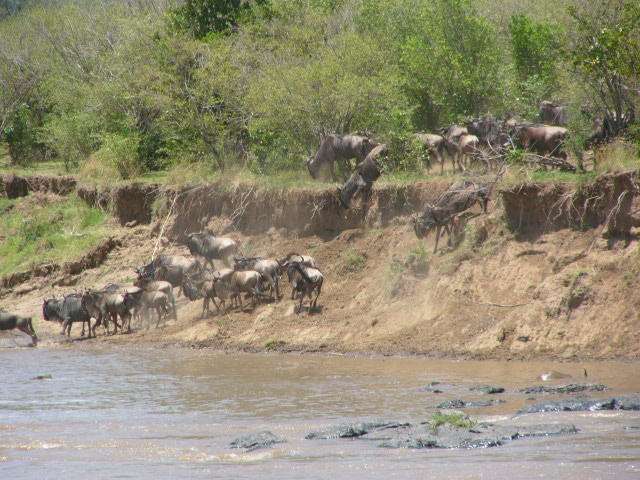
Great Migration Annual Movement
The migration follows a clockwise route through northern Tanzania into southern Kenya and back again. While timing can shift slightly based on rainfall, the general pattern remains reliable:
January to March, Southern Serengeti
Herds gather on the short grass plains around Ndutu. This period is defined by calving season, with high concentrations of animals and increased predator activity.
April to May, Central and Western Serengeti
As the rains begin, the herds move northwest through the central corridor toward the Grumeti River. Movement is steady, with fewer crowds but more challenging travel conditions due to rain.
June to July, Western Corridor
Crossings of the Grumeti River begin. These are smaller in scale than later river crossings but still relevant for itinerary planning.
July to October, Northern Serengeti and Maasai Mara
The herds reach the Mara River, where river crossings take place. This is the most requested period due to visibility of crossings and high wildlife density on both sides of the border.
November to December, Return to Southern Serengeti
With the onset of short rains, the herds begin moving south again, completing the cycle.
Key Locations for Positioning
- Southern Serengeti and Ndutu, best for calving and predator interaction
- Central Serengeti, consistent game viewing during transition months
- Western Corridor, seasonal river activity and lower traffic
- Northern Serengeti, access to Mara River crossings with fewer vehicles than Kenya side
- Maasai Mara National Reserve, high-density viewing during peak migration months

Calving Season (Baby Season)
The calving season typically runs from late January to early March in the southern Serengeti and Ndutu region. During this period, approximately 400,000 to 500,000 wildebeest calves are born within a short timeframe.
This phase is significant for:
- High predator activity, particularly lion, cheetah, and hyena
- Open plains visibility, supporting consistent game viewing
- Short grass conditions, which attract large herd concentrations
Calving season is not dependent on river crossings and provides a different positioning opportunity, particularly for clients interested in wildlife interaction and photographic content rather than movement events.
Seasonal Positioning for Trade
The Great Migration allows for structured itinerary planning across multiple regions:
- January to March, focus on Southern Serengeti and Ndutu
- June to July, Western Serengeti for early movement and lower demand periods
- July to October, Northern Serengeti and Maasai Mara for peak migration visibility
- November to December, transitional safaris with flexible routing
Combining regions such as the Serengeti with the Maasai Mara allows for extended itineraries that follow herd movement while maintaining high game viewing standards.
The Great Migration operates on a seasonal cycle with defined regional highlights across Tanzania and Kenya. Understanding the movement patterns, key locations, and timing of calving season allows for accurate itinerary structuring and alignment with client expectations.