
The possibility of sharing the fairway with Africa’s incredible wildlife is a unique aspect of a golfing safari, setting it apart from any other golf destination in the world. At Ascot Tours, we’ve seen the delight on our clients’ faces when they spot a graceful impala bounding across the green, a family of warthogs trotting past their tee box, or even a majestic giraffe peering curiously from behind a marula tree.
These wildlife encounters are not just novelties; they are an integral part of the magic. They remind you, with every swing, that you are golfing in a truly special place, where the boundaries between golf course and wilderness are beautifully blurred. But with this unique privilege comes a responsibility to understand and respect these wild neighbors. So, let me share some insights into the kinds of wildlife you might encounter and how to enjoy these moments safely and responsibly.
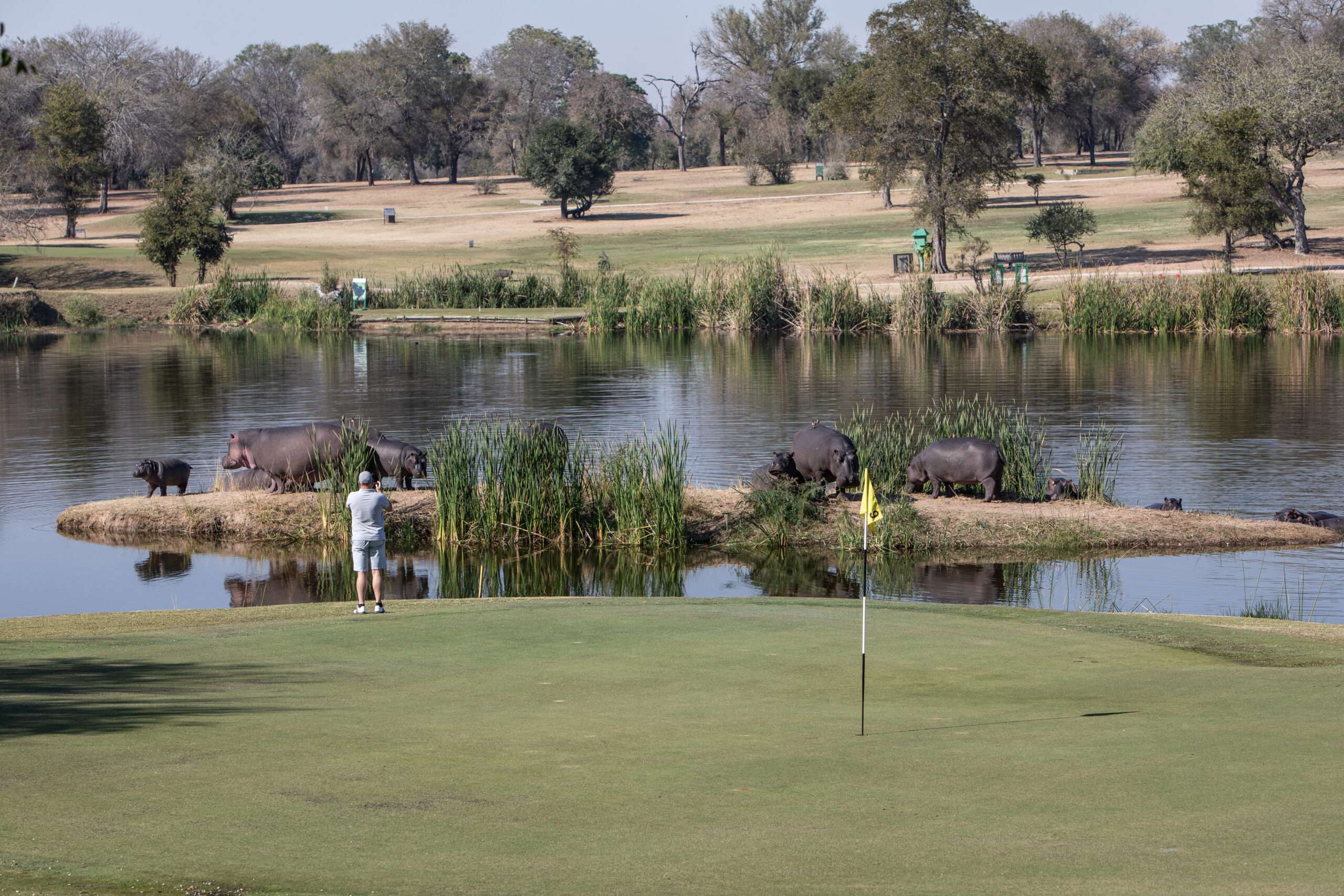
Your Unofficial Gallery
The type of wildlife you’ll see varies greatly depending on the location of the golf course within Africa:
Antelope Aplenty: Across many courses, particularly those bordering game reserves like Leopard Creek near Kruger or Hans Merensky in Phalaborwa (South Africa) or Kilimanjaro Golf & Wildlife Estate (Tanzania), you’re very likely to see various antelope species. Impala, kudu, waterbuck, nyala, and bushbuck are common sights, often grazing peacefully on the verges or even venturing onto the fairways. They are generally skittish and will move away as you approach.
Warthogs & Bushpigs: These characterful creatures are often seen snuffling around for roots and tubers, sometimes digging up small patches of the rough (much to the chagrin of greenkeepers!). They tend to be more focused on their foraging than on golfers.
Monkeys & Baboons: Vervet monkeys and baboons are common, especially in areas with abundant trees. They are intelligent and curious and can be quite bold. They are notorious for snatching unattended food or even golf balls if given the chance!
Birdlife Extraordinaire: Africa’s birdlife is simply spectacular, and golf courses, with their water features and varied vegetation, are havens for countless species. From colourful sunbirds and kingfishers to majestic fish eagles and ground hornbills, you’ll have a constant avian soundtrack to your round.

The “Wow” Factor Sightings
Giraffes & Zebras: On courses like Hans Merensky or within certain wildlife estates, seeing giraffes or zebras is a distinct possibility and always a breathtaking moment.
Hippos & Crocodiles: Courses with significant water hazards, like Leopard Creek (with its famous 13th green) or Sabi River Sun, are home to hippos and crocodiles. These animals command serious respect and are best admired from a very safe distance.
Elephants (Rarely On the Course, but Nearby): While direct encounters with elephants on managed fairways are rare (and actively discouraged by course management for safety), on courses bordering major parks like Elephant Hills (Zimbabwe), you might see them in the adjoining bush or hear them nearby, adding to the wild ambiance.

Enjoying Wildlife Safely & Responsibly:
While these encounters are wonderful, it’s crucial to remember these are wild animals. Their behaviours can be unpredictable. Here are my golden rules for enjoying wildlife on the golf course, honed from years of experience with Ascot Tours:
- Maintain a Respectful Distance: This is paramount. Never approach wild animals, no matter how habituated they may seem. Use your zoom lens for photos. If animals are on the fairway, wait for them to leave or play around them.
- Never Feed the Animals: This is dangerous for both you and the animals. It makes them lose their natural fear of humans, which can lead to aggressive behavior. Secure all food items in your golf bag or cart.
- Be Aware of Your Surroundings: Particularly pay attention to water hazards such as crocodiles and hippos, as well as dense bush. Listen to your caddy; they are usually very attuned to local wildlife.
- Don’t Run: If an animal seems agitated or approaches too closely, back away slowly and calmly. Running can trigger a chase response in some animals.
- Monkeys & Baboons – Extra Caution: These primates can be cheeky. Don’t leave food unattended in your golf cart. If they approach, avoid making direct eye contact or exposing your teeth, as this could be perceived as an aggressive gesture. Keep your golf bag zipped.
- Heed Signage and Staff Advice: Many courses will have signs warning about specific wildlife. Always follow the instructions of course staff and marshals.
- Children Need Close Supervision: If you’re golfing with children, ensure they understand these rules and are kept close.
- Night Golf is Not a Thing (for good reason!): Most dangerous predators are nocturnal. Stick to daylight hours for your rounds.

Your Local Wildlife Expert
Often, your caddy will be an invaluable source of information about the local fauna. They see these animals daily and can often point out intriguing species or share fascinating anecdotes. They also understand animal behaviour and can advise safe conduct.
The chance to see wildlife is one of the extraordinary bonuses of an African golf safari. It transforms a simple round of golf into a mini-safari experience. By approaching these encounters with respect, caution, and a sense of wonder, you can create memories that go far beyond your scorecard. At Ascot Tours, we always brief our clients on safe wildlife interaction, ensuring their golfing safari is both thrilling and secure.
Ready for a round where the gallery might just have fur or feathers? Contact Ascot Tours at scott@ascottours.co.za to plan your unique wildlife golfing adventure!
By Scott Edkins, Ascot Tours