
Ascot Tours is committed to offering more than just premium golf travel. Through our Golfing for Change initiative, we actively support conservation and community development efforts across Africa. Our goal is to make a measurable difference—helping wildlife survive and communities thrive. It’s about aligning world-class experiences with meaningful action toward a sustainable tomorrow.
Project Rhino Rewild
This is one of the most ambitious conservation efforts of our time – the rewilding of 2,000 southern white rhinos over the next decade. Spearheaded by African Parks, the project aims to secure the future of this iconic species while restoring ecosystems across the continent of Africa.

Ascot Tours is proud to play a part in this historic movement. Through Golfing for Change, we are supporting Rhino #181, one of the rhinos now on its journey back to the wild. Every cent of our donation goes toward helping it thrive.
The project unfolds in three phases:
Rescue: In 2023, African Parks acquired 2,000 rhinos from the world’s largest captive rhino-breeding facility.
Rewild: Over the next ten years, 300 rhinos will be relocated annually to secure, protected areas across Africa to rebuild wild populations.
Renew: These rewilded rhinos will help restore ecosystems, improve biodiversity, and support local communities through eco-tourism and sustainable land use.
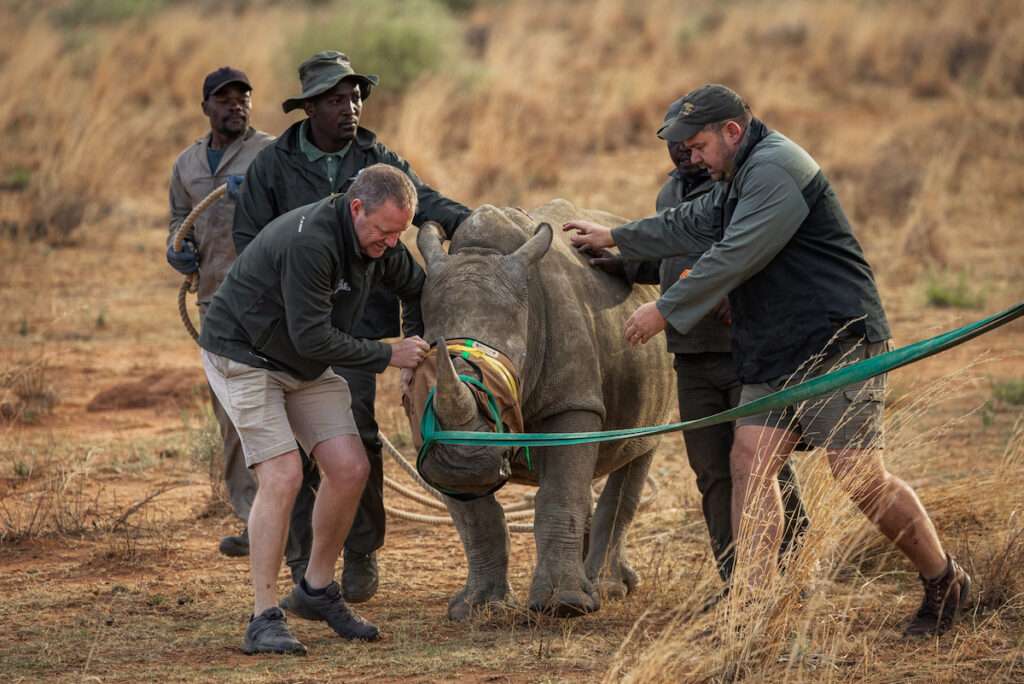


How to move a rhino
Moving one of the largest land mammals across an entire continent is no easy feat. And according to African Parks, it is not something that should be attempted at home. Here is how they are doing it:
- Dart: Tranquillize rhino with dart to keep it safe and calm for the journey ahead.
- Pack: Guide drowsy rhino into crate and use crane to hoist crate onto truck.
- Drive: Head to airport.
- Load: Lift crate into airplane’s cargo hold. Wheels up.
- Unload: Land. Unload crate onto truck.
- Drive: Head to new home.
- Place in Boma: Place rhino in temporary holding pen (a boma) to help it adjust to new environment.
- Monitor: Carefully watch rhino in boma.
- Release: After monitoring period, release rhino into wider ecosystem. Continue close monitoring.
- Repeat: Do it again 1,999 times.